Erika Strassburger

4MR stormwater project update raises transparency questions

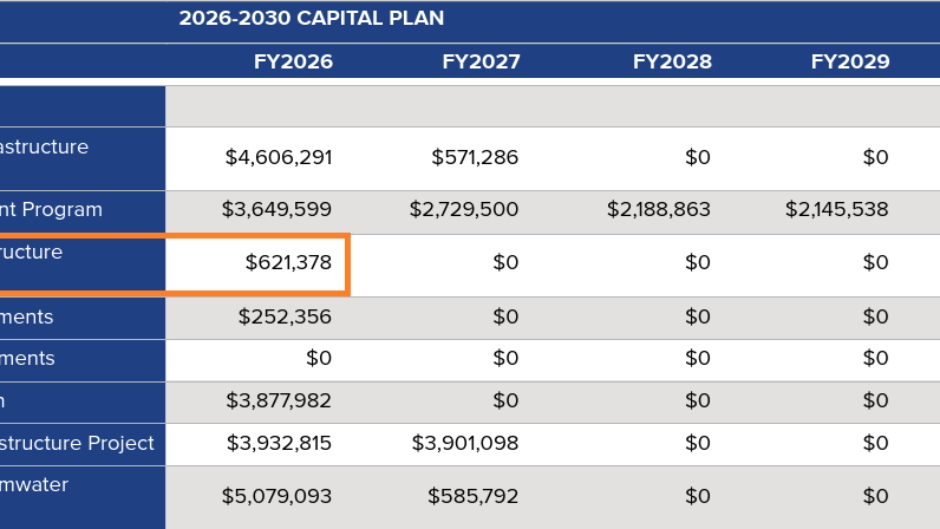
Page 26 of Pittsburgh Water’s 2026-2030 Capital Improvement Plan shows funding given to stormwater projects. The Four Mile Run Stormwater project received $621,378 for data collection from flow monitors. Lines added to highlight relevant information. Pittsburgh Water Capital Improvement Plan - screenshots taken from tinyurl.com/pgh-water-capital-plan

Pittsburgh Water mailed a letter dated Jan. 28 to residents of The Run. It was signed by chief engineering officer Rachael Beam. It assured residents that Pittsburgh Water has not forgotten them. This was Pittsburgh Water’s first formal communication with residents since canceling the project designed to address dangerous flooding in their neighborhood.

The big news: Pittsburgh Water (also known as PWSA) will continue gathering data from flow monitors installed last year. The authority’s 2026-2030 Capital Improvement Plan includes $621,378 for this. The plan is for Pittsburgh Water to update data it collected in 2019. It will then analyze the effects of work like 2022 repairs to the M-29 outfall pipe into the Monongahela River.

The letter made repeated mentions of seeking “alternative” strategies for flood relief. It did not state outright that Pittsburgh Water has abandoned its $8.7 million design for the Four Mile Run stormwater project. But it seems implied.

Watching and waiting

The project billed as a solution to the Run’s longtime flooding received $41 million in 2017. The Mon-Oakland Connector shuttle road planned for the same location was canceled in 2022. After that, Pittsburgh Water removed the green infrastructure part of the plan. Now it would include only “gray” infrastructure—pipes under the neighborhood itself. The authority reaffirmed its commitment to the project, but quietly eliminated funding in late 2024.

Ms. Beam’s Jan. 28 letter cites “limited capital dollars and the need to prioritize regulatory-driven projects” as the reasons for defunding the project.

“While the Four Mile Run project remains on hold, we continue to explore alternatives, engage with partners, and identify potential funding opportunities to move forward responsibly,” she added.

District 5 City Councilor Barb Warwick organized Run residents to speak at a press conference and Pittsburgh Water board meeting last May. She said the utility has kept its promise to update her monthly.

“The people in The Run will not be satisfied until the flooding is fixed,” she told us during a Feb. 15 phone call. “Maybe the M-29 [outfall work] is the fix, but we won’t know that until PWSA gathers the data and shows us.”

Priorities for limited funds

The utility’s Capital Improvement Plan contains a Project Prioritization section. This part explains the process of deciding which projects get funded each year. A committee reviews each new project proposal and scores it based on six criteria: Regulatory compliance, quality of service, safety, risk of failure, security and social impact. Each is weighted differently. For instance, regulatory compliance has the highest at 25%. The committee uses these scores to list top projects for the Pittsburgh Water executive team. The executive team makes funding decisions, then the board votes on the budget.

But scores are missing from descriptions of the projects themselves. This makes it hard to know how some projects won out over others.

For example, the Capital Improvement Plan includes more than $5.17 million for “Bus Rapid Transit Stormwater Infrastructure Improvements.” This amount is spread out over the next four years.

We asked Pittsburgh Water for the scores the Bus Rapid Transit project and the Four Mile Run project received. The authority did not provide them before the print deadline.

A larger pattern

In December, reports by Public Source raised concerns over Pittsburgh Water’s transparency. Community engagement has been limited. For over two years, board approvals have been unanimous with little or no public discussion. Meanwhile, the authority has raised rates and begun collecting a stormwater fee in 2022.

“The stormwater fee they collect does not go to stormwater. It just goes into the general fund — which feels very non-transparent,” Ms. Warwick said.

Pittsburgh Water livestreams board meetings and posts recordings online. But Public Source found that “board deliberation happens privately” in committee meetings or executive sessions. This practice violates Pennsylvania’s Sunshine Act.

Public Source reported that District 8 City Councilor Erika Strassburger said she and her fellow Pittsburgh Water board members “could be better about daylighting some of the hard discussions we have internally … I’ll own that, and we should all own that.”

One of those “hard discussions” may have involved the Four Mile Run stormwater project. Board members never mentioned it in public budget discussions in the months leading up to defunding it.

Attempts at building trust

Ms. Warwick said Pittsburgh Water has consulted with her on how to approach Run residents. The authority wanted to hold another public meeting because they had told residents they would. Ms. Warwick recommended sending the letter instead.

“Until they have results to share with us,” she said of the data monitoring, “I don’t see much point in dragging residents out to a public meeting.”

She praised the Mon Water Project for its advocacy for The Run and the entire watershed. The nonprofit is also advocating for funding to fix Panther Hollow Lake.

“That would be a huge win not just for flood mitigation, but also for preservation of a historic community asset,” she said.

Peer into the depths

View Pittsburgh Water’s 2026-2030 Capital Improvement Plan at tinyurl.com/pgh-water-capital-plan.

Learn more about flood relief projects Mon Water Project has proposed in and around The Run at monwaterproject.org/initiatives/talk-tour-legislative-2025.

Take a deep dive into the history of the stormwater project at junctioncoalition.org/tag/pwsa.

This article originally appeared in The Homepage.
Pittsburgh Water Defunds Four Mile Run Stormwater Project

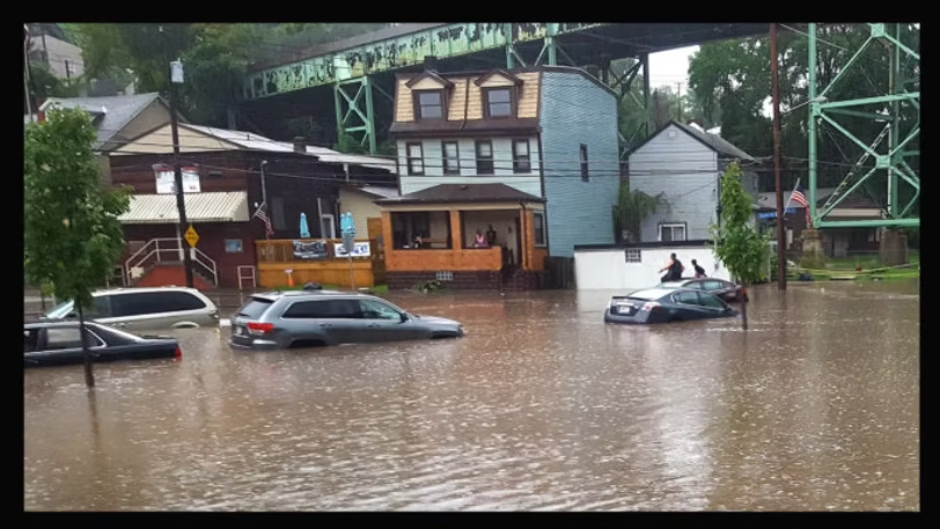
A Four Mile Run resident and his 8-year-old son trapped on top of their car await rescue during the 2016 flood. The stormwater project meant to prevent floods like this was defunded in late 2024. Photo by Justin Macey

On April 22, District 5 City Councilor Barb Warwick held a post-agenda hearing on Pittsburgh Water’s announced “pause” on the Four Mile Run project and other flood mitigation projects in the city. Representatives of Pittsburgh Water (formerly PWSA) and the U.S. Army Corps of Engineers attended and answered questions.

Shifting funds and priorities

Ms. Warwick asked on April 22 why the water authority determined that the project is not as urgent as other flood projects that are still moving forward. At one time more than $40 million was budgeted for it, so the councilor asked what changed.

“It’s really funding,” responded Tony Igwe, Pittsburgh Water’s senior group manager for stormwater.

Mr. Igwe said that about $8.7 million has been spent on the project so far. About half a million went to work on the Bridle Trail in Schenley Park that was supposed to hold water back from The Run. But most of the funds were spent on design and planning. He said construction of the project would have cost about $30 million.

Marc Glowczewski, planning chief for the U.S. Army Corps of Engineers, said federal environmental infrastructure programs could contribute 75% toward the costs of projects like the one in The Run. Pittsburgh Water would need to submit a letter of intent and then the corps would apply for funding.

Ms. Warwick said the project’s indefinite pause bolsters a longstanding suspicion held by Run residents that they could only get their flooding addressed by accepting the now-shelved Mon-Oakland Connector shuttle road through their neighborhood.

District 8 City Councilor Erika Strassburger is a board member for Pittsburgh Water. She said she has been part of past discussions about the project. “I don’t think it helps to insinuate in any way … that there was somehow a decision that was made to punish the residents of The Run because of an organizing effort,” she said.

Ms. Warwick said some neighbors in The Run must routinely replace their boilers and clean up dead rats in their yards. “So, when I as their council representative explain their disillusion with city government and our city authorities over this project, that is what I’m talking about,” she added.

A ‘long and painful history’

Flooding has plagued The Run for decades, although some older residents have said it was not an issue before construction of the Parkway began in 1949 and uphill neighborhoods like Oakland rapidly developed. As the flooding worsened, Run residents were told repeatedly that Pittsburgh lacked funds to address it.

A 2009 flood, which Pittsburgh Water labels a 75-year event, caused catastrophic damage: Cars floated down the streets in 6 feet of water and sewage, while residents watched the mix breach the first floors of their homes.

Ms. Warwick recalled Pittsburgh Water around 2013 holding small meetings at the homes of Run residents to float ideas for flood mitigation, but a lack of funds meant those discussions went nowhere.

Residents learned of plans for the Mon-Oakland Connector from a 2015 Pittsburgh Post-Gazette article. But those plans did not include flood control in The Run. City government and Pittsburgh Water were shamed into securing funds for the Four Mile Run stormwater project after media coverage of a harrowing 2016 flood showed emergency responders rescuing a father and son trapped on top of their car.

The stormwater project was billed as a solution to the flooding, but only a third of the funding was slated for the “core project” in Schenley Park and The Run.

The rest of the funding was intended for possible future projects in the watershed, green infrastructure improvements and partnerships with the universities and nonprofits, according to a 2020 email from Pittsburgh Water’s senior manager of public affairs, Rebecca Zito.

Documents obtained through Right-to-Know requests showed that the current chairman of Pittsburgh Water’s board of directors, Alex Sciulli, preferred a more drastic solution. Going back to at least 2019, he advocated for removing residents from flood-prone areas and “changing the flood plain.” In a 2020 email to then-Mayor Bill Peduto’s chief of staff, Dan Gilman, Mr. Sciulli stressed that the “discussion regarding property acquisition” may need to go forward despite being unpopular.

Within six months of Mayor Ed Gainey’s February 2022 cancellation of the connector project, Pittsburgh Water removed all green infrastructure elements from the Four Mile Run stormwater project. After a November 2022 public meeting announcing the project’s “new direction,” it stagnated. Sometime in 2024, Ms. Warwick said, Pittsburgh Water decided to remove all funding for project construction.

“Given the long and painful history of this flood mitigation project for residents in Four Mile Run, I am beyond disappointed in the decision by Pittsburgh Water to indefinitely postpone this work with no prior notification to me or the community,” she said on May 17.

Residents left treading water

Dana Provenzano has seen her share of flooding. She has owned and operated Zano’s Pub House on Acorn Street in The Run for 12 years.

“When people around the city get flooding, it’s water. When we get flooding, it’s sewage,” she said on May 18. “It’s a health concern. I can’t open my doors until I know it’s safe to serve people.”

Ms. Provenzano said the flooding has been getting worse.

Mr. Igwe mentioned during the post-agenda hearing that 2022 work on the outfall into the Monongahela River may have helped, but they don’t know for sure. The Run hasn’t gotten weather conditions that cause flooding since 2021.

We asked Annie Quinn, founder of the Mon Water Project, if The Run will flood again. She said on May 19 that the watershed outfall updates have stopped the Monongahela River from backing up.

But the pipes under The Run are still a pinch point. Water from parts of Oakland and Squirrel Hill, plus all of Greenfield, converges there. “That hasn’t changed,” she emphasized.

“So, yes, the right amount of rain in a short enough time could activate that pinch point and cause more flooding,” Ms. Quinn concluded.

Community actions in the pipeline

On May 23, as this article went to print, Ms. Warwick and several Run residents were scheduled to hold a press conference and give testimony at Pittsburgh Water’s monthly board meeting.

Ms. Warwick told us she planned to ask Pittsburgh Water to restore funding to the Four Mile Run stormwater project.

“Pittsburgh Water must do right by The Run and reallocate the funding to find a solution to the life-threatening flooding in their neighborhood,” she said.

This article originally appeared in The Homepage.